
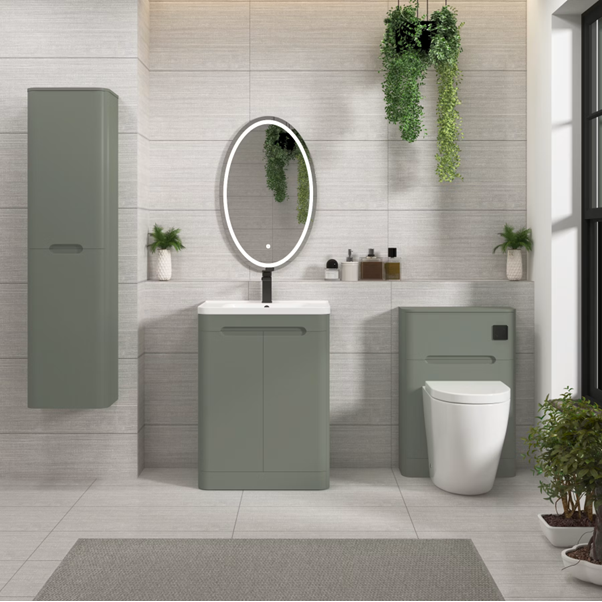
Most people choose bathroom furniture the way they choose a sofa. They see a photo, they like the look, and they buy it. The trouble is, a bathroom is not a living room. It has pipes, doors, damp, and about six people trying to use it before 8 am.
This is a collaborative post
A combination vanity unit, which brings the toilet and basin storage together in one unit, can be a brilliant fix for a lot of homes. But it is not the answer for every bathroom, and anyone who tells you it is has not actually thought it through. Good bathroom design starts with how the room is used, not with what looks nice in a showroom.
Why Layout Matters More Than Size
Some people think a big bathroom does not automatically mean an easy bathroom. But plenty of large bathrooms feel cluttered, while smaller ones, laid out properly, can feel completely calm to use.
Walking space is the real test. If you have to twist sideways to open a drawer or shuffle past the door to reach the sink, the room has failed you, no matter how expensive the tiles are.
You may not realise it, but doors matter too, perhaps more than you expect. A door that swings inward can steal a huge chunk of usable floor, and that missing space has to come from somewhere else in the plan.
Another thing that decides the feel and look is bathroom storage. Toothbrushes, razors, cleaning sprays, hairdryers- they all need somewhere to live. Put that storage in the wrong place and clutter creeps in within weeks.
And then don’t ignore the visual clutter. A pedestal basin here, a close-coupled toilet there, a cabinet fitted into the corner, all add up to a bathroom that looks busy even when it is technically cleaner. Fewer separate pieces almost always read as a calmer room.
What Designers Actually Ask Before Recommending a Combination Vanity Unit
Experts don’t start with a product catalogue. They start by asking questions about how the bathroom actually gets used.
They further ask how many people rely on it every day. A bathroom shared by a family of four has completely different demands to one used by a single person getting ready in peace.
Types of bathrooms can be another important piece of information they need. The questions may include Is it the main family bathroom, an ensuite, or a downstairs cloakroom? Each one has a different job. A family bathroom takes a daily battering. An ensuite is usually calmer and more personal. A cloakroom barely needs any storage at all, which changes everything.
No bathroom can survive without storage. So, they may need to know how much storage is really needed, not just wanted? This is not about cramming in as many drawers as possible. It is about matching the storage to what the household actually keeps in there.
Will children be using it? If so, easy cleaning and sturdy, simple furniture beat clever design details every time. Kids are not gentle with bathrooms.
How often does it actually get cleaned, and by whom? A household with fifteen spare minutes a week needs furniture that wipes down fast and does not trap grime in awkward gaps.
And what does the plumbing allow? Older homes especially can have pipework fixed in place for decades, which sometimes rules a layout out before style ever gets a say.
These are not box ticking questions. Every answer nudges the recommendation in a different direction, which is exactly why two similar budgets can end up with two completely different, and both perfectly sensible, bathrooms.
When a Combination Vanity Unit Makes the Most Sense
A combination vanity unit is a 3-in-1 unit that does the job of a toilet, a basin, and a storage cabinet all in one footprint. In the right bathroom, that is a genuine problem solver.
And for that reason, small bathrooms are the obvious winner. These allow you to swap a pedestal basin, a freestanding toilet and a separate cupboard for one connected unit, and suddenly there is walking space that simply was not there before.
Family bathrooms benefit because storage sits exactly where it gets used, right next to the basin. That means less distance between reaching for something and actually finding it, which matters a lot at 7:45am with three kids waiting.
The benefits are not limited to space saving. Busy households gain the most from easier cleaning. Fewer legs, fewer gaps, fewer awkward corners to reach into with a cloth. One flat-based unit beats three separate items every time on cleaning day.
New builds and full renovations suit combination units particularly well, because the plumbing can be planned around them from scratch. That opens up choices like a 900mm, 1000mm, 1100mm or 1300mm combination vanity unit, depending on how much wall you actually have.
Any home short on storage but not keen on losing floor space benefits too, since the storage lives inside the space the toilet was taking up anyway, rather than needing a separate cabinet bolted on somewhere else.
In every one of these cases, the unit is solving an actual problem, whether that is space, mess, or cleaning time. It is never chosen just because it looks nice in a brochure.
When Separate Furniture Is Genuinely the Better Choice
We have discussed a few bathrooms where separate pieces win, and it is worth saying so plainly.
In contrast to small bathrooms, large luxury spaces rarely need the space saving that a combination unit offers. There is room to spare, so separate pieces can be positioned deliberately to give the room a sense of scale, rather than crammed together to save space nobody was short of.
Highly customised layouts, especially ones built around a statement freestanding bath, often work better with the toilet and basin treated as separate, secondary elements. A combination unit here can actually pull focus away from the design rather than support it.
Victorian properties are another obvious case. Original fireplaces, decorative flooring, ornate coving, none of that sits comfortably next to a sleek modern combination unit, however well it is made.
And design-led projects, where the homeowner has a very specific look in mind, usually benefit from the flexibility of choosing each piece individually rather than working within the limits of one combined unit.
None of this makes combination units a lesser option. It just proves they are one tool among several, and the right choice always depends on the bathroom in front of you.
The Mistakes People Keep Making
After years of looking at bathroom plans, the same mistakes show up again and again.
Buying the furniture before planning the storage. People fall for a unit in a showroom, then realise later it does not actually hold what they need.
Ignoring cleaning access. Tight gaps behind furniture look fine on installation day and become a nightmare to reach within a few months.
Squeezing the spacing too tight around the toilet and basin. Chasing maximum storage can leave too little room to move, which makes the whole bathroom feel smaller, not bigger.
Not leaving enough worktop space. A unit chosen purely for its compact size sometimes leaves nowhere to actually put anything, so clutter ends up on the windowsill instead.
And buying everything separately rather than planning the room as one job. A toilet here, a basin there, a cabinet somewhere else, bought as three different decisions, rarely ends up looking like one considered room.
How Combination Units Actually Change Daily Life
Forget the spec sheet for a second. Here is what a combination vanity unit actually does to your morning.
The room looks calmer, plain and simple, because there are fewer separate items competing for your eye. A small bathroom instantly feels bigger.
Hidden cisterns get rid of one of the bulkiest, least attractive parts of a traditional toilet, which helps both the look of the room and how easy it is to clean around it.
Storage sits exactly where you reach for it, which quietly keeps things organised without anyone having to try. Families notice this most during the morning scramble, when everything is within arm’s reach instead of scattered across three different shelves.
And cleaning gets faster. Fewer legs, fewer gaps, fewer places for dust to hide, which matters far more once the shine of a new bathroom has worn off.
What to Check If a Combination Unit Is Right for You
If you have decided a combination unit suits your bathroom, here is what actually matters when choosing one.
Storage capacity first. Work out what you need to store, then check the drawers can actually hold it, rather than assuming more drawers automatically means better.
Drawer configuration matters too. Deep drawers for towels, shallow ones for smaller bits, a decent mix beats one size fits all.
Check the materials. Moisture resistant 18mm MFC construction is worth looking for, since a damp bathroom will find out fast if a unit is not built for it.
Soft close mechanisms are not a gimmick. They stop the daily slamming that wears furniture out early, especially in a busy household.
Basin size should suit how the room is actually used, not just how it looks in a photo. A ceramic basin that is too small becomes annoying fast.
Toilet compatibility is worth checking properly. Look for a WRAS approved cistern and a rimless toilet with dual flush, since both affect hygiene and water use for years to come.
Think about installation too. Confirm the unit works with your existing plumbing, or find out early if changes are needed, since that affects both cost and timing. If your layout does not suit a full combination unit but you still want the tidier look of a hidden cistern, a standalone WC Unit paired separately with a basin cabinet can achieve a similar effect without locking you into one fixed footprint.
And check what happens if something goes wrong later. A meaningful guarantee, such as a 5 year guarantee, says a lot about how a unit is expected to hold up once real life sets in. Worth a browse through a full range of combination Vanity Units to see how sizes and finishes compare, from Gloss White through to Hale Black.
The Bottom Line
Good bathroom design is not about chasing whatever looks trendiest this year. It is about picking the layout that actually suits how the room gets used, by the people who use it every day. A combination vanity unit is a brilliant choice in plenty of bathrooms, especially where space, storage and easy cleaning are the priority. Just make sure it earns its place because it fits the room, not because it looks good on a screen.
How did I do?
Did you enjoy this post? If so, you should check out more of the ‘usual’ type of stuff I write. Honest, relatable rants about parenting three young boys. With a touch of swearing and a lot of sarcasm. You’ll like it! Check out my Mum Life section or head to my Travel Section for some UK family holiday and days out inspiration.
If you like a bit of social media madness, pop over to my Facebook page where you’ll be able to have a laugh at what ridiculousness goes on in my house with three boys on a daily basis. Warning – there is often sarcasm, and usually swearing. There are also great travel reviews and the odd giveaway. Feel free to join my Twins, Tantrums and Cold Coffee – Shits and Giggles Parenting Group too, where everyone shares their hilarious stories.
If you like what you see, how about you check me out on Pinterest, Instagram, Threads and TikTok too.
And if you want to work with me, feel free to give me a shout at helen@twinstantrumsandcoldcoffee.com and I’ll get back to you.