
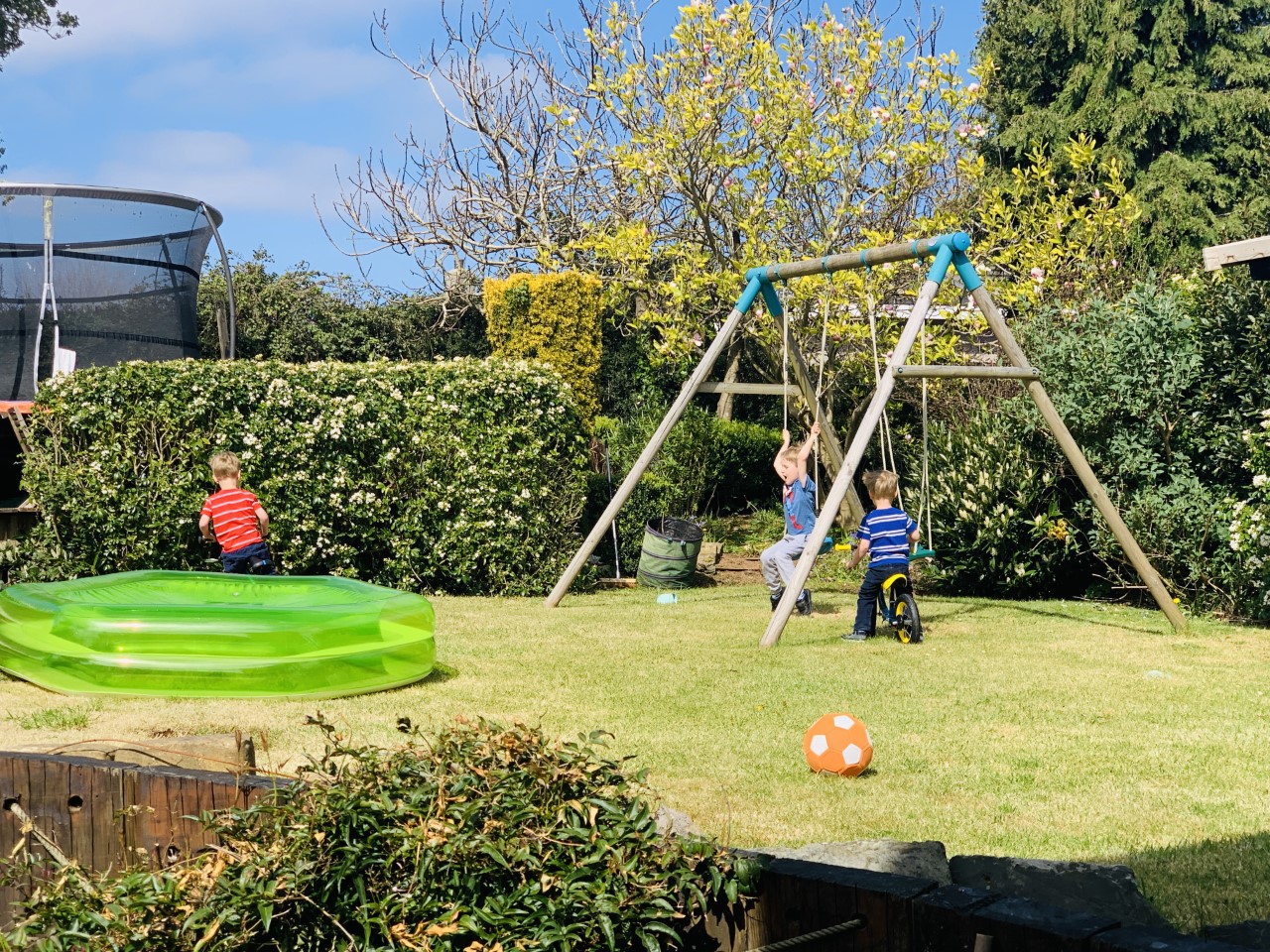
Family gardens have a lot asked of them. Children want somewhere to run, play and make a mess, while adults might picture relaxed summer dinners or a quiet seat with a coffee. Add bikes, toys, bins and gardening equipment, and an attractive outdoor space can quickly become crowded.
This is a collaborative post
Thoughtful planning can help different activities sit comfortably alongside each other. You do not need an enormous garden or an expensive redesign. Creating clear areas and making practical features part of the overall look can give everyone somewhere to enjoy.
Give Everyone Their Own Space
Dividing the garden according to how your family uses it is a useful starting point. An open area can be kept available for children’s games, while a patio or deck might become the main dining space. A bench or pair of chairs in a quieter corner gives adults somewhere to sit.
These areas do not need permanent barriers between them. Furniture placement, outdoor rugs and planters can provide subtle visual boundaries. Keeping the children’s area within easy view of the main seating space can also be useful for families with younger children.
Try to keep routes through the garden clear. If reaching the shed means squeezing past a dining table or walking through the children’s play area, everyday use can become frustrating. A straightforward layout helps the space feel calmer even when family life is anything but.
Make Practical Features Part of the Design
Every garden contains elements that exist mainly for practical reasons. Storage, fencing and bins may be necessary, but they do not have to dominate the view.
A storage bench can provide seating while hiding smaller toys, outdoor cushions or games. Larger items might be kept in a shed or weather-resistant storage box positioned close to where they are normally used. When everything has a convenient home, clearing up after an afternoon outside becomes much quicker.
Boundaries can receive some attention too. Painting a suitable fence can provide a fresh backdrop, while climbing plants and trellis can soften plain surfaces. Decorative finishes such as slatted cladding can also add texture to an appropriate wall or boundary, particularly behind a seating or dining area.
Before fitting any decorative material outdoors, check that it is suitable for the intended setting and follow the relevant installation guidance.
Choose Family-Friendly Finishing Touches
A family garden needs to cope with regular use, so choose furniture and accessories with everyday life in mind. Sturdy tables, wipe-clean surfaces and washable cushion covers are easier to live with when muddy hands, snacks and drinks are part of the picture.
Soft furnishings can still bring plenty of personality. Outdoor cushions and weather-suitable rugs introduce colour and make seating areas feel more comfortable. A limited colour palette can help different pieces work together even if they were bought at different times.
Planting can soften patios, fences and play areas. Large containers are useful because they add greenery without creating extensive borders to maintain. Position pots where they will not interfere with running children or frequently used paths.
When choosing plants, consider your household carefully. Families with young children or pets should check whether particular varieties are suitable before adding them to accessible areas.
Make the Garden Work Beyond Daytime
Once children are indoors and toys have been put away, the same garden can become a relaxed evening space for adults.
Lighting plays a big part in changing the atmosphere. Outdoor-rated string lights around a seating area can provide a gentle glow, while solar lanterns can add softer points of light near paths and pots. Steps and changes in level should have suitable illumination for safer movement after dark.
A few practical additions can make evenings more comfortable. Keep outdoor cushions within easy reach, add a small table for drinks and position seating where you can enjoy the parts of the garden you like most.
Any mains-powered outdoor lighting should be suitable for exterior conditions, with electrical work carried out by an appropriately qualified professional where necessary.
A successful family garden does not have to choose between practicality and personality. Clear activity areas, attractive storage, comfortable furniture and thoughtful lighting can create a space that changes with the family’s needs. With a little planning, the garden can belong to everyone, from busy afternoons of children’s games to quieter evenings outdoors.
How did I do?
Did you enjoy this post? If so, you should check out more of the ‘usual’ type of stuff I write. Honest, relatable rants about parenting three young boys. With a touch of swearing and a lot of sarcasm. You’ll like it! Check out my Mum Life section or head to my Travel Section for some UK family holiday and days out inspiration.
If you like a bit of social media madness, pop over to my Facebook page where you’ll be able to have a laugh at what ridiculousness goes on in my house with three boys on a daily basis. Warning – there is often sarcasm, and usually swearing. There are also great travel reviews and the odd giveaway. Feel free to join my Twins, Tantrums and Cold Coffee – Shits and Giggles Parenting Group too, where everyone shares their hilarious stories.
If you like what you see, how about you check me out on Pinterest, Instagram, Threads and TikTok too.
And if you want to work with me, feel free to give me a shout at helen@twinstantrumsandcoldcoffee.com and I’ll get back to you.